Medicine and Society
Dec 2025
Peer-Reviewed
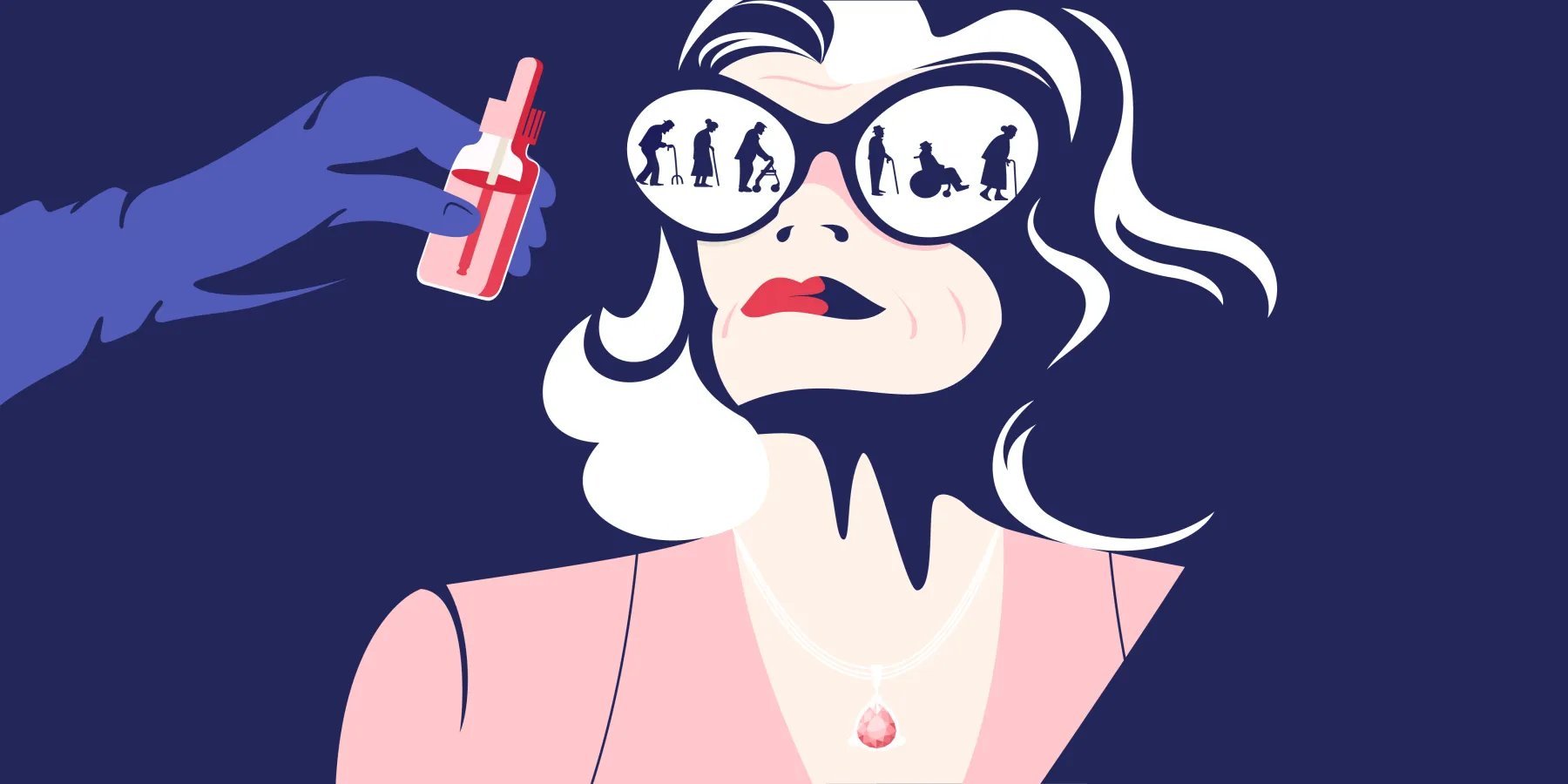
This article argues that inequitable access to interventions capable of dramatically extending human lifespans would undermine individual and collective upkeep of civic virtue. Specifically, intervention maldistribution that normalizes the expectation of differential lifespans based on socioeconomic status undermines the moral agency of persons living with poverty and the commonality of lifespan experiences, such as milestones and events. As a result of their greater access to interventions that significantly increase lifespan, those with wealth might be tempted to regard persons living with poverty as biologically distinct, physiologically inferior, and less deserving of moral consideration than themselves.
Contemporary geroscience has, in recent years, made significant strides toward radical life extension; it is, at the very least, possible that some novel forms of medical intervention—including new gene therapies and senolytic medications—might permit some humans now alive to experience lifespans longer than even those of the most long-lived members of the human species thus far.1 This possibility brings with it any number of ethical questions—including whether such longevity is, itself, a morally significant good.2 In this paper, however, I want to examine another moral worry about radical life extension—namely, its effects upon the sorts of civic virtue that seem necessary for stable liberal democratic governance. I will argue that the availability of such therapies in societies characterized by widespread inequality in wealth and power is likely to have a corrosive effect upon such virtues. If medical innovation creates a world in which people with wealth can expect to have lifespans significantly longer than those of persons living with poverty, then the former might be increasingly prone to see the latter as fundamentally alien sorts of creatures—a conclusion that does not make the exercise of civic virtues impossible, but which would make that exercise more difficult. Therapies that bring the possibility of radical life extension into an already unjust social world, in sum, might have significant effects upon the moral character of those found within that world; they might, indeed, serve to make some inhabitants of that world worse people—worse, at least, at those moral tasks required to pursue justice in shared political life.
We might note, by way of introduction, that this paper assumes that the social and political world into which these therapies are to be introduced resembles our own. The speed with which these interventions are being introduced suggests that we are unlikely to create more equal societies—or a more equitable planet—before we have to come to grips with how these interventions are rightly to be distributed. We might note, furthermore, that most societies—including liberal democratic ones—have become more unequal in terms of income distribution over the past 50 years.3 We might therefore expect that medical interventions with the power to extend lifespans will be introduced into a world in which some people have significantly greater effective power—in the market and in political life—than others. Tellingly, it has been found that those with wealth have greater effective access to highly desirable glucagon-like peptide-1 receptor agonists (GLP-1 RA) drugs for diabetes than persons living with poverty.4 Similar distributional effects can be seen with other therapies, such as anti-malarial drugs5 and cancer medications.6 We might assume that the prospect of radical life extension would prove no less desirable than the promise of disease cure or control and therefore assume that the individuals who receive access to therapeutic life extension are likely to have disproportionate wealth. The focus of the present paper is on what, if anything, is morally distinctive about gerotherapeutics and the longevity gap they might eventually make possible.
There is a longevity gap between persons with low and high incomes,7,8 and making that gap larger would seem plausibly to count as a moral wrong—certainly, much of the literature presumes that such a gap constitutes an injustice.9 The focus of this paper, however, is the impact of this gap on the civic virtues, which we may understand to be those virtues of minimal altruism and moral motivation required for a citizen to be a successful participant in a liberal polity. That some such virtues are required seems to be accepted by most political philosophers. Some theorists argue that societies cannot engage in good-faith political negotiations without something like patriotism or, at the very least, a felt commitment to the political society as a sort of moral project; one cannot be a good member of a political society, on this view, without something like a proper moral commitment to that country and therefore to the good of its members.10 John Rawls, in a more modest vein, argues that the stability of a liberal democracy requires something like the commitment to listen to the arguments of one’s fellow citizens and to be motivated by the particular interests of those fellow citizens—a concept he develops under the concept of civic friendship.11 On this latter view, political societies cannot demonstrate stability for the right reasons—that is, cannot be justified as political communities rather than contests of power and violence—unless the citizens demonstrate a continued moral will to take the interests of their fellow citizens as morally significant when considering which policies to pursue, to defend, and to endorse. Liberal democracy, in short, requires at the very least the sort of virtues involved in listening to the voices of one’s fellow citizens and taking their words as having moral weight—even when that sort of listening might get in the way of naked self-interest.
Those who are more powerful have a tendency to regard that power as natural and often as the result of basic differences in biology.
It follows that citizens must be willing to get less than they could, from time to time, because of the moral importance ascribed to the other members of the political community. This sort of moral motivation, however, is itself a learned skill, as Rawls himself emphasized in his account of these virtues; and, like all skills, it must be developed and maintained through time.12 Rawls argues that citizenship in the liberal state provides any number of opportunities to practice the virtue of seeing fellow citizens as morally significant. We vote together, argue together about politics and so on, and, in so doing, we remind ourselves of the moral reality of those with whom we are in political fellowship.13 It is also plausible, however, that there exist standing pressures to regard these fellow citizens as morally unlike ourselves—as aliens or as lesser forms of human beings. There is some evidence, in particular, that those with great wealth are prone to dehumanizing explanations of poverty and, indeed, of those experiencing poverty; they tend to favor explanations of wealth that begin with the moral incapacity of those experiencing poverty or even something quite like biological difference.14,15 There is something like a standing moral risk that the bodies and the lives of those who have been marginalized are taken as presumptively inhuman by those who are given more central places within social life generally. One example is the pseudo-scientific colonial logic whereby Indigenous persons were construed as members of separate and inferior race.16 Another is when other forms of bodies—such as the bodies of achondroplastic dwarves or disabled bodies more generally—are taken to be imperfect or pathological.17 Those who are more powerful have a tendency to regard that power as natural and often as the result of basic differences in biology.16 The contention of this paper, though, is that such ideological deformation can occur not simply with reference to the physical body but with reference to the lived experience of aging and mortality; dehumanization can result not simply from physical differences but from differences in chronological expectations as well. This tendency to dehumanize those who have been marginalized makes civic virtue more difficult; it is hard to preserve civic friendship, after all, when one has decided some members of the polity are not entirely human.
At this point, we might return to the issue of life extension and ask how this possibility might affect civic virtues. There is not space here to expound on a general theory of the factors that might help maintain the skill of moral recognition over time. We can, however, say that something like recognition of the common narrative structure of most human lives is one means by which this moral skill is preserved. What is meant by “recognition of a common narrative structure” is that we are more likely to see each other as morally worthy of concern when we are able to understand the ways in which we often lead quite similar lives; again, Rawls emphasizes some particular commonalities in his analysis of public reason and mutual respect.18 However different those with wealth and those experiencing poverty might be, there are many ways in which the narrative arc of their lives is quite similar; both face similar milestones throughout their lives—from the fact of being born in vulnerability to particular others, to the experience of loving particular people, to the demands of choosing a profession and a practical identity. Indeed, we might extend these ideas to the temporal process of seeing one’s choices play out against the backdrop of an expected story of how a life develops and how it necessarily ends. Not all of us have the same sorts of experiences—some of us are denied love or a career—but many of us have similar moments, and we react to them in markedly similar ways. We have, as it were, a certain framework of narrative similarity; those with wealth and those experiencing poverty can both expect to have 30th and 50th birthdays, and they react to those birthdays with similarly complicated sets of emotions on the basis of socially available stories about what being 30 and 50 mean. Through the similarities in the narrative arc of our lives—common milestones, common social meanings of these milestones, common joys and sorrows—we can come to recognize something about the ways in which the people with whom we do politics are, in fact, creatures very much like ourselves. Charles Dickens describes this phenomenon well, having Fred Scrooge—Ebenezer’s less miserly nephew—note that, at Christmas, people are inclined to look at one another less as “another race of creatures bound on other journeys” and more as “fellow-passengers to the grave”19—a recognition of similarity that might stand, to some degree, as support for the skill of moral recognition at a time when such recognition between those with wealth and those experiencing poverty was becoming strained.
These worries are not unique to issues of longevity. Earlier discussions of medical augmentation of height noted that such therapies had the potential to exacerbate existing inequality, as class differences affected access to enhancement of socially desirable characteristics, such as being tall.20 Life-extending therapies, however, can be a profoundly damaging instantiation of this problem by increasing privileged citizens’ sense of biological difference and eroding that sense of narrative similarity that stands against it. Imagine that therapies come to exist that double expected longevity (including both number of years and the number of healthy years)—from, say, 80 years to 160 years, on average—and imagine that these therapies are provided, in the first instance, disproportionately to those with wealth. Under these circumstances, it is plausible to imagine that the stock of narrative similarities between those with high and low incomes might become more strained; the social meaning of being 50, for instance, is unlikely to be the same when one’s expected lifespan is 80 and when it is twice that number. These ideas can be amplified by noting the ways in which chronological age and narrative self-construction might come apart as human lifespans become more varied. One’s chronological age might no longer indicate much of anything about how much time one can be expected to have left—or even what sorts of experiences one can be presumed to have had in the time one has lived.21
Indeed, experiences as ordinary as choosing a career or a romantic partner might seem fundamentally different when one has twice as much time in which to either enjoy what one has built or try something entirely new. If there is already a risk of democratic decline that emerges from profound inequality of wealth—if, that is, civic virtue becomes somewhat frayed by the tendency of those with wealth to ignore the moral humanity of those experiencing poverty—then it is likely that such decline might be exacerbated, at the very least, by an increased sense that these 2 groups do, in fact, exist as different sorts of creatures and can expect radically different sorts of stories to be told about—and in—the lives they lead.
We may conclude by noting that nothing said here should constitute a dispositive reason to condemn radical life extension; it might be true that there exist significant enough reasons to pursue life-extending interventions and even to accept their necessarily unequal availability. This paper intends only to assert that potential injustices might emerge by means of the introduction of those interventions into any world as unequal as our own and that, if we do choose to develop them, we ought at the very least to be cognizant of how they might affect civic virtue—and, indeed, the possibility of justified governance such virtue makes possible.
Le Couteur DG, Barzilai N. New horizons in life extension, healthspan extension and exceptional longevity. Age Ageing. 2022;51(8):afac156.
Davis JK. New Methusalehs: The Ethics of Life Extension. MIT Press; 2018.
Gradín C. Revisiting the trends in global inequality. World Dev. 2024;179:106607.
Eberly LA, Yang L, Essien UR, et al. Racial, ethnic, and socioeconomic inequities in glucagon-like peptide-1 receptor agonist use among patients with diabetes in the US. JAMA Health Forum. 2021;2(12):e214182.
Hossain MS, Ahmed TS, Sultana N, Chowdhury MAB, Uddin MJ. Examining the disparities of anti-malarial drug consumption among children under the age of five: a study of 5 malaria-endemic countries. Malar J. 2023;22(1):370.
Ben-Ari E. Persistent poverty linked to increased risk of dying from cancer. National Cancer Institute blog. November 19, 2020. Accessed July 14, 2025. https://www.cancer.gov/news-events/cancer-currents-blog/2020/persistent-poverty-increased-cancer-death-risk
New report: working-class Americans can expect to die at least 7 years earlier than the wealthy. US Senate Committee on Health, Education, Labor, and Pensions. March 7, 2025. Accessed July 14, 2025. https://www.help.senate.gov/dem/newsroom/press/new-report-working-class-americans-can-expect-to-die-at-least-7-years-earlier-than-the-wealthy
Dizikes P. New study shows rich, poor have huge mortality gap in US. MIT News. April 11, 2016. Accessed July 14, 2025. https://news.mit.edu/2016/study-rich-poor-huge-mortality-gap-us-0411
David Miller. On Nationality. Oxford University Press; 1995.
Rawls J. Political Liberalism. Columbia University Press; 1989.
Rawls J. A Theory of Justice. Belknap Press; 1999.
Ruane M. A brief history of the enduring phony science that perpetuates white supremacy. Washington Post. April 30, 2019. Accessed June 5, 2025. https://www.washingtonpost.com/local/a-brief-history-of-the-enduring-phony-science-that-perpetuates-white-supremacy/2019/04/29/20e6aef0-5aeb-11e9-a00e-050dc7b82693_story.html
Wendell S. The Rejected Body: Feminist Philosophical Reflections on Disability. Routledge; 1997.
Blake M. Burdens of judgment. In: Mandle J, Reidy DA, eds. The Cambridge Rawls Lexicon. Cambridge University Press; 2015:74-78.
Dickens C. A Christmas Carol. Chapman & Hall; 1843.