Medical Education
Dec 2025
Peer-Reviewed
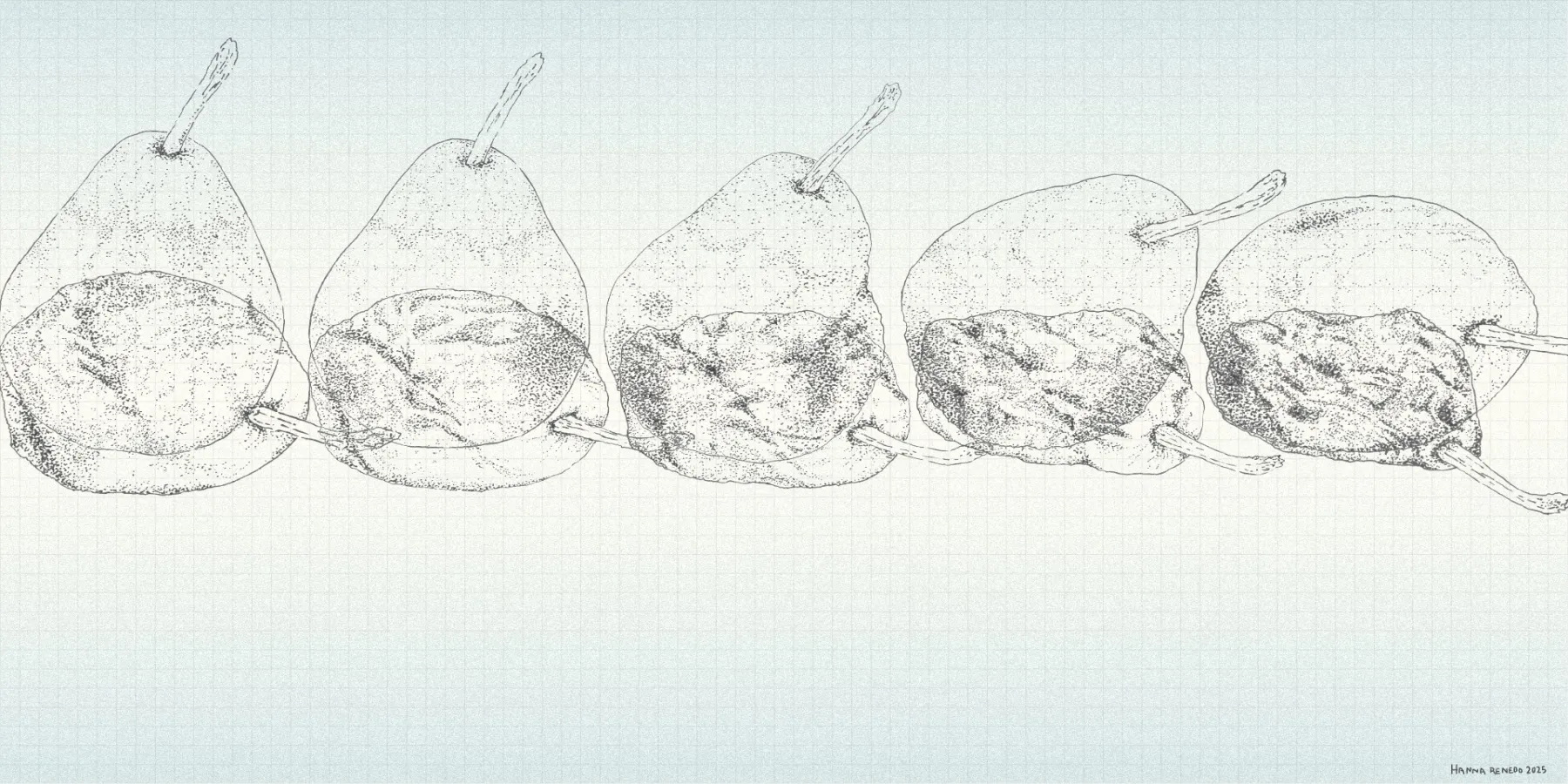
Documenting one’s assessment of a patient’s physical appearance during a clinical encounter is regarded as a key element in a clinician’s overall judgment of a patient’s health. This article considers ethically and clinically relevant uses and misuses of such appraisals in clinical practice when applied to judgments of a patient’s agedness. Despite being a possible invitation for negative clinician bias, such appraisals should be part of clinical encounters and training.
Looking older than one’s chronological age is an important health indicator. In most modern societies, where “looks” confer social distinction, older people often report feeling that their aged appearance renders them socially “invisible.”1,2,3 It is unsurprising, therefore, that the default option for most older people’s subjective judgments about their age is to consider themselves younger than their chronological age.4 But in the health care setting, appearing older than one’s chronological age carries potentially relevant information, serving as a sign of probable ill-health and warranting further investigation.
At the same time, clinicians working with older patients have long been at pains to distinguish between age and disease, insisting that even those of great age can yet be fit and healthy.5 Nevertheless, the linkage between the two cannot be gainsaid, even if it has led to a too-ready acceptance of a certain level of morbidity as a “natural” component of old age. The point of this paper is not to support this latter assumption (that older age equates with greater morbidity) but to suggest that clinicians’ judgments of patients’ agedness—their looking older than their chronological age—possesses clinical value rather than simply reflecting “ageist bias.”
What, then, should one make of passing clinical judgments about a patient’s agedness (as defined above)? Physicians, it is said, are trained to begin their examination “with a general inspection of the patient, which often includes an assessment of whether the patient ‘appears his/her stated age’ or ‘appears older.’”6 This, it is said, should be “a component of the physical examination.”7 Little guidance, however, is provided as to how such judgments should be made, and surprisingly little research has been conducted on how accurate such clinical judgments are. If, as research suggests, looking older than one’s age is indeed a marker of poor health and a poor prognosis,8,9,10 it is important that clinicians make such judgments reliably.
One relatively recent review of the literature concluded that “perceived age promises to be a useful predictor of overall mortality and cardiovascular, pulmonary, cognitive and osseous comorbidities.”10 But while most of the studies examined in that review were based on ratings of standardized photographs of the face and head, few were based upon the usual face-to-face encounter typical of clinic appointments. The question remains whether perceptions of agedness made in routine clinical practice are sufficiently reliable to guide routine clinical assessment.
Research on the accuracy of clinical and nonclinical judgments of agedness is not encouraging. While one review concluded that “age estimation of unfamiliar faces can be quite accurate,”11 accuracy varies according to the similarity—in race and age group—between the observers and the observed.11,12 Williams and colleagues, for example, observed significant variation in health care students’ ability to accurately estimate a patient’s age, with one 83-year-old patient being judged anywhere from 55 to 89 years of age, while another 60-year-old patient was judged to be somewhere between 34 to 63 years of age.13 In general, the accuracy of age judgments is inversely related to the observed person’s age, with the ages of older patients less often accurately judged.14
Research on the accuracy of clinical and nonclinical judgments of agedness is not encouraging.
A number of contextual factors need to be considered in judgments of patients’ appearance, not least the problem of “own-age” bias. Training and experience significantly improve the accuracy of age estimation, especially for older people.15 Studies of the accuracy of geriatricians’ estimates of their patients’ age, for example, suggest good inter-rater agreement.16 Nevertheless, many factors can act as more salient markers of ill-health than clinicians’ assessment of their patient’s agedness, such as the impact of weight loss, poor sleep, chronic pain, poverty, and self-neglect. All of these factors can contribute to judging someone’s appearance as older than their chronological age, and, in a given case, any one of these factors could be the more important marker of ill health. Nevertheless, there is evidence that, setting aside such contextual clues of age as hair and clothing, judgments of facial aging and facial agedness retain some prognostic value.17
While there are clearly problems with the accuracy of clinicians—particularly, young clinicians—in judging the agedness of the patients they see, consistent evidence that looking older than one’s chronological age is a sign, or prognosticator, of ill health suggests a value in retaining this element in the clinical assessment. The benefit of making such judgments remains, however, problematic for reasons other than the reliability of such assessments. That looking older than one’s chronological age is a reliable marker of disease is a matter of empirical enquiry. At the same time, judgments that a patient looks older than their age might lead the clinician to a too-ready assumption of the inevitability of their ill-health and a too-ready assumption about the limited prospects of effective treatment.
Ageism has been said to characterize health care settings both in North America and in Europe,18,19 leading one group of reviewers to claim that “age-based discrimination is common and long-standing among health care providers, within health care systems, and in health care policies.”20 Contributing to such discrimination is not only a widespread, anti-age bias, but also the widespread absence of old and very old patients enrolled in clinical trials. The result is a lack of evidence on which to base appropriate prescription for and treatment of the most aged patients.21 Evidence-based clinical practice guidelines rarely highlight the particular needs of old and very old patients.22,23 At the same time, historical assumptions about when and when not to intervene, what and what not to prescribe, and which investigations should or should not be conducted are less easily updated in the absence of such guidelines and related clinical research findings.
A firm body of evidence indicates that, at least for middle-aged and older people, looking old for one’s age is a sign of both present ill health and future morbidity.10 For that reason, it is understandable that many physical examinations incorporate the clinician’s judgments of a patient’s appearance and their relative agedness. The question arises whether such judgements in practice lead to more or less effective investigations, interventions, and care. As long as most clinical guidelines base their recommendations on younger rather than older patients, judgments of age and agedness are unlikely to improve, and, if anything, such guidelines might discourage more positive expectations. While looking for signs of agedness in the physical examination might be a very traditional (and evidence-based) practice, the otherwise “invisibility” of both age and agedness in clinical research and evidence-based clinical guidelines seems a tradition in urgent need of change. More particularly, there is a strong case to be made for a more explicit focus on training junior (and mostly young) doctors on how to judge age and agedness accurately and carefully, both to increase the potential value of this element in clinical assessment and to challenge any ageist assumptions about what ageing looks like.
Mordini E, De Hert P, eds. Ageing and Invisibility. IOS Press; 2010.
Janac S, Clarke B, Gems D. Aging: natural or disease? A view from medical textbooks. In: Vaiserman AM, ed. Anti-Aging Drugs: From Basic Research to Clinical Practice. Royal Society of Chemistry; 2017:chap 2.
Hwang SW, Atia M, Nisenbaum R, Pare DE, Joordens S. Is looking older than one’s actual age a sign of poor health? J Gen Intern Med. 2011;26(2):136-141.
Christensen K, Thinggaard M, McGue M, et al. Perceived age as clinically useful biomarker of ageing: cohort study. BMJ. 2009;339:b5262.
Williams B, Boyle M, O’Meara P. Can undergraduate paramedic and nursing students accurately estimate patient age and weight? Prehosp Disaster Med. 2010;25(2):171-177.
Huber M, Stanciole A, Wahlbeck K, et al. Quality in and Equality of Access to Healthcare Services. European Commission; 2008. Accessed May 19, 2025. https://www.euro.centre.org/downloads/detail/882
Institute of Medicine Committee on the Future Health Care Workforce for Older Americans. Retooling for an Aging America: Building the Health Care Workforce. National Academies Press; 2008.
Wyman MF, Shiovitz-Ezra S, Bengel J. Ageism in the health care system: providers, patients and systems. In: Ayalon L, Tesch-Römer C, eds. Contemporary Perspectives on Ageism. Springer Open; 2018:193-212.
Wehling M. Older people, a plethora of drugs, and drug list approaches: useful, efficacious, or a waste of time? J Am Med Dir Assoc. 2016;17(12):1073-1075.