Cynthia E. Schairer, PhD, Caryn Kseniya Rubanovich, MS, and Cinnamon S. Bloss, PhD
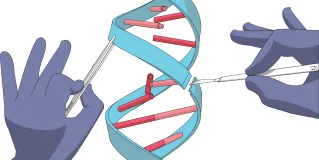
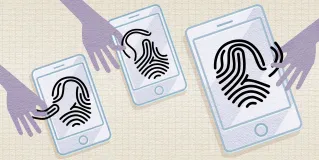
Questions about data privacy need to be addressed when research institutions negotiate with companies developing mobile health applications. Commercial terms of use and data sharing notifications should be reviewed before use in human subject research settings.
AMA J Ethics. 2018;20(9):E864-872. doi:
10.1001/amajethics.2018.864.
Emily L. Evans, PhD, MPH and Danielle Whicher, PhD, MHS
Clinical decision support systems leverage data generated in the course of standard clinical care to improve clinical practice. They need to ensure privacy and quality of patients’ data, but must also allow queries of electronic health records.
AMA J Ethics. 2018;20(9):E857-863. doi:
10.1001/amajethics.2018.857.
Camillo Lamanna, MMathPhil, MBBS and Lauren Byrne, MBBS
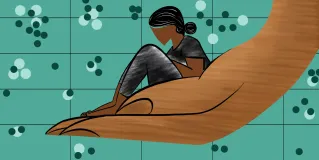
Perhaps machine learning systems trained on patients’ electronic health records and social media footprints could be used as decision aids when patients lack capacity or face overwhelming decisions.
AMA J Ethics. 2018;20(9):E902-910. doi:
10.1001/amajethics.2018.902.
Graphic pathographies can illustrate how overreliance on statistics can obscure the clinical relevance of patients’ experiences of anxiety when they’re presented with prognoses.
AMA J Ethics. 2018;20(9):E897-901. doi:
10.1001/amajethics.2018.897.
This photograph of a kaleidoscope of potentially life-saving and potentially life-threatening pills suggests ethical conflict inherent in clinicians’ strivings to meet patients’ pain relief needs without contributing crises of drug diversion.
AMA J Ethics. 2018;20(9):E894-896. doi:
10.1001/amajethics.2018.894.
Transitions in relabeling personalized medicine as precision medicine, precision health, or wellness genomics reflect shifting the locus of responsibility for health from individuals to clinicians and in shifting focus from genetic risk to genetic enhancement.
AMA J Ethics. 2018;20(9):E881-890. doi:
10.1001/amajethics.2018.881.
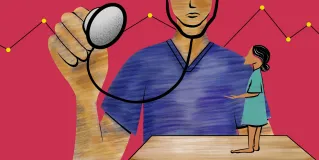
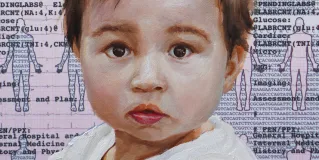
This portrait of a child against a backdrop of health data suggests how a patient’s individuality can be obscured when precision medicine is used in decision making and developing target therapies.
AMA J Ethics. 2018;20(9):E891-893. doi:
10.1001/amajethics.2018.891.
Social and behavioral data contained in electronic health records are essential for studying health disparities. Can researchers avoid bias when collecting, analyzing, and using such data?
AMA J Ethics. 2018;20(9):E873-880. doi:
10.1001/amajethics.2018.873.
Physicians new to a case might object to an established care plan. Practice variation, clinical momentum, and how value is assigned by different parties to acute care and comfort measures can each contribute to conflict in these cases.
AMA J Ethics. 2018;20(8):E699-707. doi:
10.1001/amajethics.2018.699.
Awareness of transference reactions, practicing active listening and reflection, pausing, and articulating one’s understanding of another’s emotional motivations can help cultivate deeper patient-clinician relationships at the end of life.
AMA J Ethics. 2018;20(8):E717-723. doi:
10.1001/amajethics.2018.717.